Sermon for January 08, 2017

Sermon for the Baptism of Our Lord

January 8, 2017, St. Paul Lutheran Church, Wallis, Texas

Sermon Text:  Romans 6:1-11

Sermon Theme:  “So Why Is Baptism Such a Big Deal?”

(Sources: Luther’s Large Catechism; Luther’s Small Catechism with Explanation; Emphasis Online Commentary; Footnotes, Life Application Study Bible; Footnotes, Concordia Self-Study Bible; Beverly Beyer, Online “Which Religions Practice Baptism, Which Do Not?”; Online Baptism Jokes; Online “What Does It Mean to Be in Christ?”; “Baptism into Jesus Christ and into His Death,” online logoapostolic. Org; Online “The Reformers Defense of Infant Baptism”)

Grace, mercy and peace to you from God our Father and from the Lord Jesus Christ.

Once, when an adult man asked to be baptized, the pastor wanted him to understand how important the Sacrament was, so he called the gentleman into his office and said solemnly, “Baptism is a serious step.  Are you prepared for it?”

“I think so,” the man replied, “my wife has made appetizers and we have a caterer coming to provide plenty of cookies and cakes for all of our guests.”

“I don’t mean that,” the pastor responded.  “I mean, are you prepared spiritually?”

“Oh, sure,” came the reply, “I’ve got a keg of beer and a case of whiskey.”

Although most Christians regard Baptism as a Sacred act, and take it very seriously, there is a tendency to be light-hearted about it, in the same way we joke about weddings, — perhaps because its preponderance overwhelms us.  In teaching Junior Confirmation, we pastors always begin the unit on Baptism by stressing how important it is to us.  And most of the time, the kids respond with a question like, “So why is Baptism such a big deal?”  And that’s a good question, because it’s what our sermon text is all about. Continue reading

Sermon for January 01, 2017

Sermon for the Circumcision and Name of Jesus, New Year’s Day,

January 1, 2017, St. Paul Lutheran Church, Wallis, Texas

Sermon Text:  Luke 2:21

Sermon Theme:  “The Church Year Continues as the Secular Year Begins, and

We Have Jesus’ Name on Us”

(Sources:  Concordia Pulpit Resources, Volume 27, Part 1, Series A; Life Application Study Bible footnotes; Concordia Self-Study Bible footnotes; Harper’s Bible Dictionary; the Westminster Dictionary of the Bible; Online Peanuts Cartoon Strips; Jesuswalk.com/lukes gospel; original ideas; The Orthodox Church by Timothy Ware); my Images Column for December 29; my sermon for December 18, 2016).

Grace, mercy, and peace to you from God our Father and from the Lord Jesus Christ.

When you get old, a year seems to go by in an eye blink.  Last year seems like last week.  Today is the first day of the secular New Year, yet the old year still seems new to me.

During his lifetime, Charles M. Schulz, through his Peanuts comic strip, left a legacy of New Year’s commentaries.  Through the mouths of the characters in his strip, he left us with much to think about.

While Lucy van Pelt was always cynical, Charlie Brown and Linus had a little better outlook on the New Year.  One year, Lucy and Charlie meet on the sidewalk on New Year’s morning, and they gaze at the snow-covered landscape.  Lucy says, “See?  What did I tell you?”  Charlie, looking at her perplexed, says, “What?”  She answers with disgust, “This year is no better than the last one!”

In another strip, Charlie Brown says to the world, “Life is like an ice cream cone, you have to lick it one day at a time.”  And in still another, Charlie says to the younger, impressionable Linus, “YEARS are like candy bars . . . we’re paying more, but they’re getting shorter.”  Without a spiritual life, I suppose people do tend to measure their days on earth in ice cream cones, or, as with the case of J. Alfred Prufrock, in coffee spoons.

In day to day living, most of us reckon time by the secular calendar, even though as Lutherans, we worship according to the ecclesiastical or church calendar.  The New Year, according to the Church calendar begins with Advent, — this year it began on November 27.  So, today, while it is the secular New Year, we celebrate the Circumcision and Name of Jesus according to the Church calendar.

Other religious communities also have a religious calendar as well as a secular calendar.  For the Jewish community, the New Year, Rosh Hashanah, begins in September or October.  The Muslim New Year, Muharram, begins in September.  The Chinese New Year, in the past, religious, now secular, begins on the new moon, between January 21 and February 20, this year falling on January 28.

The ecclesiastical calendar reminds us that life is more than just eating candy bars and drinking coffee.  This day matters, not because it starts the new,  secular year, but because God gives His blessings to us through, and only through, Jesus’ name.

On this day, one week after Christmas, or, by Hebrew counting, eight days after Jesus’ birth, the baby Jesus was circumcised, as all good Jewish boys were.  On that occasion, He was also given His name, also according to custom.

You know, I don’t like to be confused about anything, and when I was growing up, listening to the pastor preach every Sunday, I was confused about these things happening to Jesus in the Temple.  It was confusing enough because our pastor sometimes preached in German, but also because I didn’t know whether Baby Jesus was brought to the Temple once, and all these things were done at the same time, or whether His parents took Him multiple times.

In later years, I was able to straighten that up in my head.  Just in case you have experienced some of the same confusion as I did, let me lay this Temple stuff out for you.

Jewish Law required that a number of ceremonies in the Temple had to be observed not long after the birth of a baby.  When I discovered there were four ceremonies rather than all in one, as I had thought as a child, the confusion was cleared up.  Jewish families went to the Temple for these four rituals:  ONE, the Circumcision and Naming of a male child; TWO, the Redemption of the First Born; THREE, the Purification of the Mother; and FOUR, the Consecration  of the child to God. Continue reading

Pictures from the Christmas Program

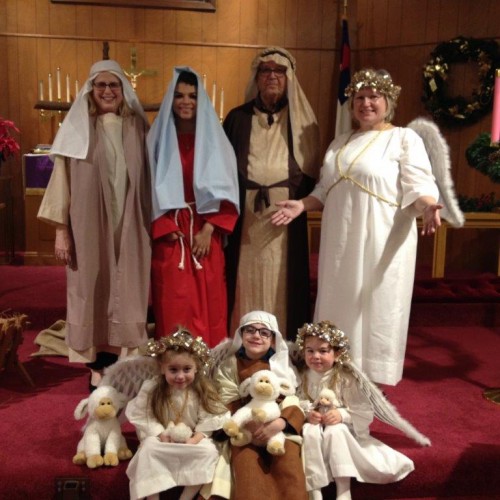
Left to Right, Back Row, Becky Jungklaus, Cassidy Brzozowski, Jan Johnson, and Joanie Murdoch; Sitting are Brooklyn, Dylan, and London.

Left to Right, Back Row, Becky Jungklaus, Cassidy Brzozowski, Jan Johnson, and Joanie Murdoch; Sitting are Brooklyn, Dylan, and London.

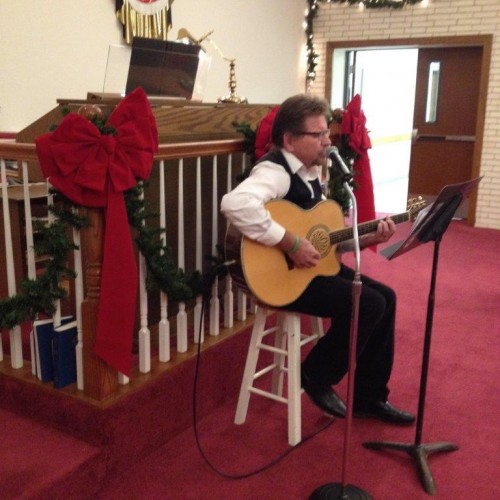
Mark Woolley playing and singing "Christmas Hallelujah" for the Christmas Day service.

Mark Woolley playing and singing “Christmas Hallelujah” for the Christmas Day service.

Sermon for December 25, 2016

Sermon for Christmas Day, December 25, 2016

St. Paul Lutheran Church, Wallis, Texas

Sermon Text:  Luke 2:1-20

Sermon Theme:  “The Gifts We Unwrap Today”

(Sources:  Concordia Pulpit Resources, Volume 24, Part 1, Series A; Concordia Pulpit Resources, Volume 27, Part 1, Series A; Online jokes about Christmas gifts; original ideas and examples; Online sermon shelbyvillechurchofchrist, The Greatest Gift)

Grace, mercy and peace to you from God our Father and from the Lord Jesus Christ.

Last year, because my wife and I have difficulty getting up and down a ladder, a friend of ours put up hooks for our Christmas stockings.  Because she loves our cat Gatsby so much, she included a hook for a burlap stocking she found in the tool shed that she thought was perfect for Gatsby.  So this year, our cat has a stocking hanging this morning for gifts from Santa.

I just read something written by television host and comedian, Jimmy Kimmel.  He said that every year Americans spend millions of dollars on Christmas gifts for their pets, which makes no sense to him.  Your pet doesn’t know it’s Christmas.  In fact, your pet doesn’t even know he is a pet, so giving your cat a sweater is about as useful as giving your microwave a hat.  I think he’s got a point there.  Gatsby hasn’t even noticed he has a stocking.

But the rest of us know that we have a stocking, and we know how many gifts we bought this Christmas, and we wonder whether the recipients will like them or not.  One of my greatest anxieties at Christmas is what if my wife or my daughters or my granddaughters don’t like the gifts I got them.  They might not say anything, but you can see on their faces and in their eyes that they didn’t like what you gave them and were disappointed.  But is that what Christmas is really all about?  If so, then it’s a miserable festival.

It is about gift-giving, however, but not the kinds of gifts that make people greedy and avaricious.

I want to talk about two gifts this morning.  One is MY gift to you.  And the other is GOD’S gift to all of us. Continue reading

Sermon for December 18. 2016

Sermon for the Fourth Sunday in Advent

December 18, 2016, St. Paul Lutheran Church, Wallis, Texas

Sermon Text:  Matthew 1:18-25

Sermon Theme:  “What the Angel Told Joseph in His Dream”

(Sources:  Concordia Pulpit Resources, Vol. 17, Part 1, 11-27-16-2-26-17, Series A; Anderson’s Cycle A Preaching Workbook; original ideas and examples; Online Jokes about Dreams; Emphasis Online Commentaries; Emphasis Online Illustrations; Harper’s Bible Dictionary)

Grace, mercy and peace to you from God our Father and from the Lord Jesus Christ.

A daughter tells the story about her parents who were asleep in bed one night, when her dad woke up everyone in the house with a loud, exuberant shout of “HELLO,” obviously to someone in his dream.  His booming “hello” scared his wife half to death so that she almost fell out of bed.

So, the next night, as the family was getting ready for bed, the Mama said to the Daddy, “Honey, if you see somebody you know tonight, just wave, — OK?”

Psychologists have written books about the meaning and significance of dreams.  Both the Old Testament and the New Testament make it clear that dreams are very important, — such as Pilate’s wife having a disturbing dream about the innocence of Jesus, the Wise Men being warned in a dream not to return to Herod, and, in today’s sermon text, an angel speaking to Joseph in a dream about Mary’s pregnancy.

While some dreams are funny, this is the most serious dream in the history of humanity, because it’s about the miraculous birth of the Savior of the world.  Joseph is a good man, humble and lowly, not rich, and God chooses him to be the foster father of God’s only begotten Son.  Because we see little and hear nothing of Joseph in the New Testament, I chose to focus on him for this past Wednesday night’s Advent Service.

As I said Wednesday night, Joseph was a very devout Jew who observed Hebrew laws and traditions, he was kindly and chivalrous, he was a loving and faithful husband, a good father, and he was hard-working and dependable.  No doubt those are reasons God chose him for the role he played in God’s plan for Salvation.

In this miraculous dream, the Angel of the Lord says to Joseph, “Joseph, son of David, do not fear to take Mary as your wife, for that which is conceived in her is from the Holy Spirit.  She will bear a son, and you shall call His name Jesus, for He will save His people from their sins.”  Joseph has been going through some soul searching doubt when this message from the Angel comes in a dream.  The woman he is engaged to is found to be with child, and Joseph was thinking of divorcing her quietly.  Joseph stands at a major crossroad in his life. Continue reading

December 4th – St. Paul Historical Marker Dedication

Jan Johnson, Congregational President, as Master of Ceremonies introducing the speakers for St. Paul's Historical Marker Program on Dec. 4.

Jan Johnson, Congregational President, as Master of Ceremonies introducing the speakers for St. Paul’s Historical Marker Program on Dec. 4.

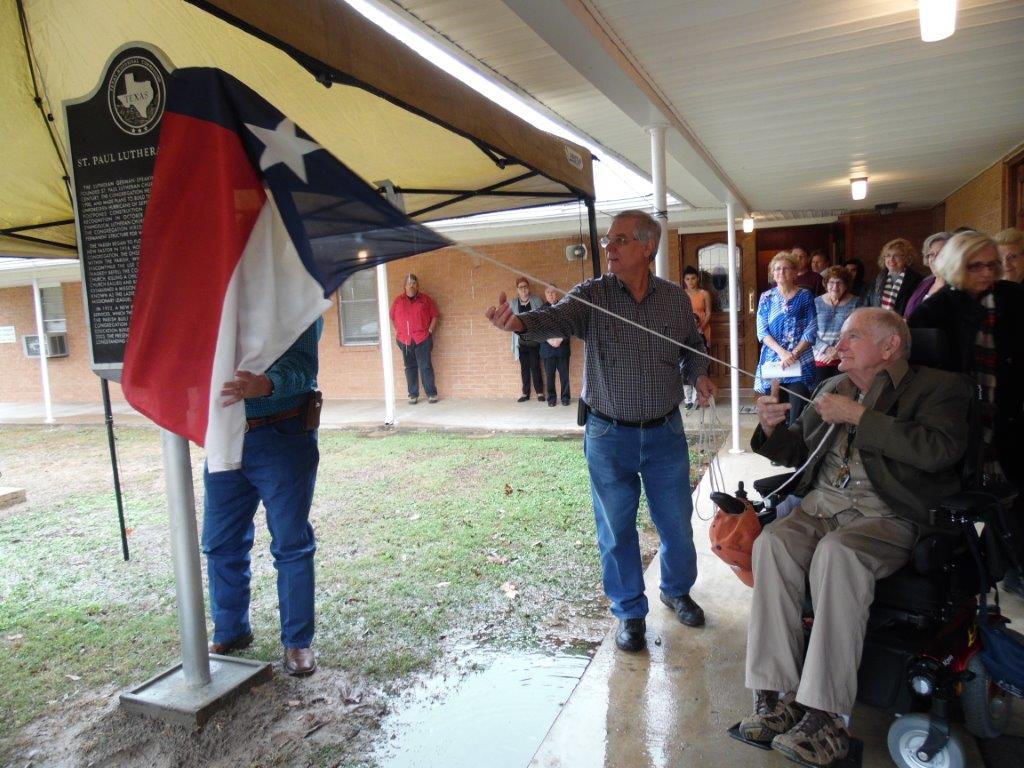
Robert Osborne is shown unveiling the St. Paul Historical Marker at the site after the Dedication Program.

Robert Osborne is shown unveiling the St. Paul Historical Marker at the site after the Dedication Program.

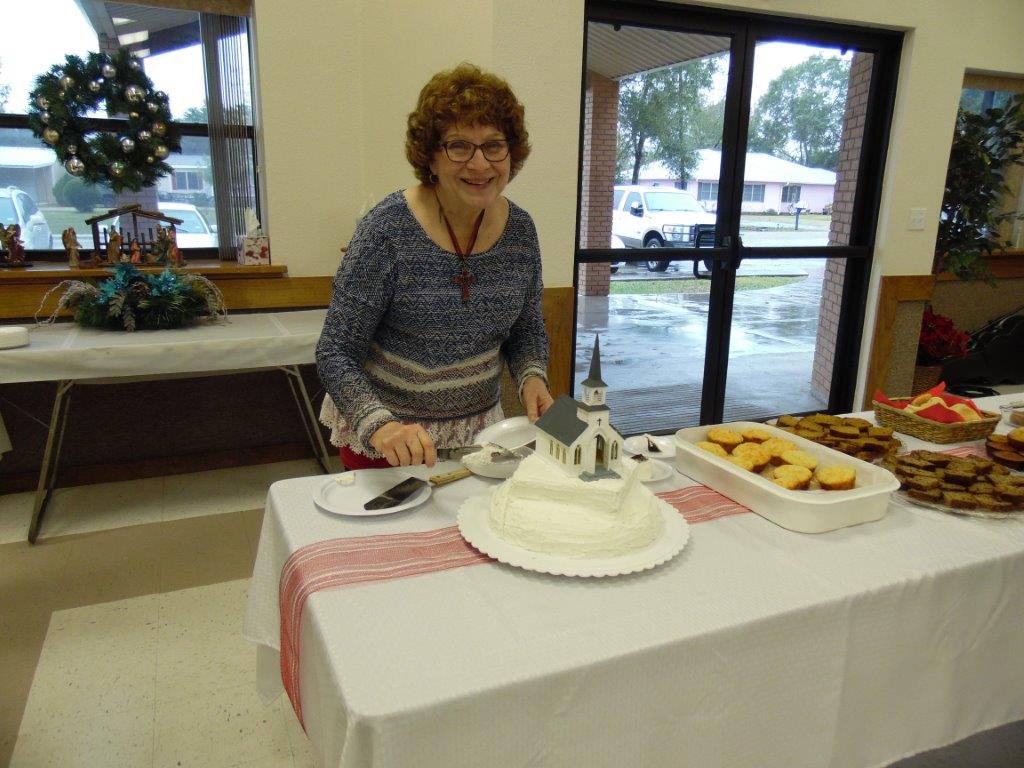
Peggy Spitzenberger getting ready to cut the special Marker Dedication celebration cake during the brunch held after the program.  A replica of the old church built in 1901 rests on top of the cake.

Peggy Spitzenberger getting ready to cut the special Marker Dedication celebration cake during the brunch held after the program. A replica of the old church built in 1901 rests on top of the cake.

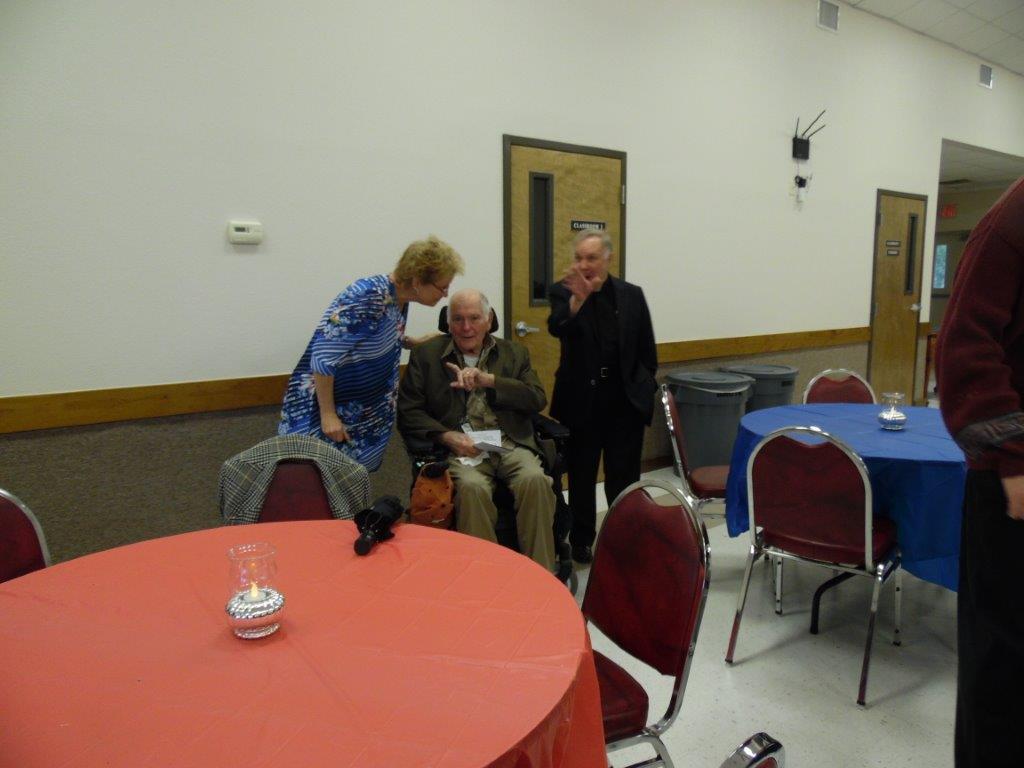
Cheryl Davis, Chairperson of the Maker Dedication Committee, shown speaking with Robert Osborne and Rev. Scott Stallings after the unveiling.

Cheryl Davis, Chairperson of the Maker Dedication Committee, shown speaking with Robert Osborne and Rev. Scott Stallings after the unveiling.

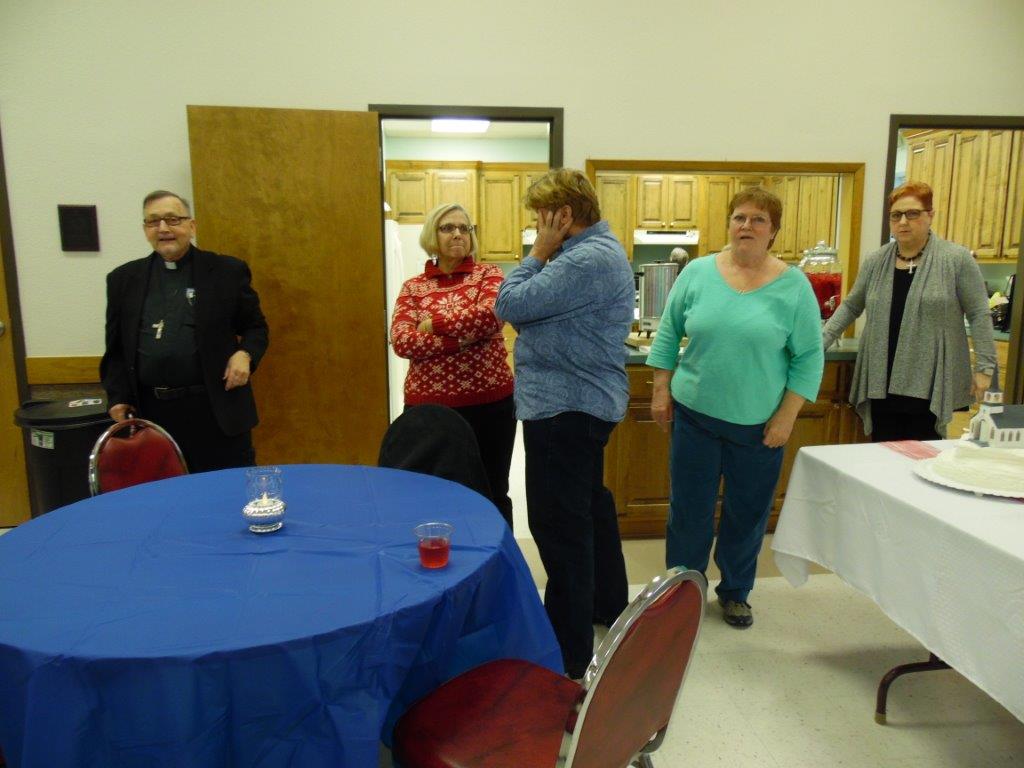
Left to right, Rev. Ray Spitzenberger, Carole Foltz, a City-of-Wallis Alderman, Maxine Cates, and Judy Stallings at the Brunch after the Marker Dedication.

Left to right, Rev. Ray Spitzenberger, Carole Foltz, a City-of-Wallis Alderman, Maxine Cates, and Judy Stallings at the Brunch after the Marker Dedication.

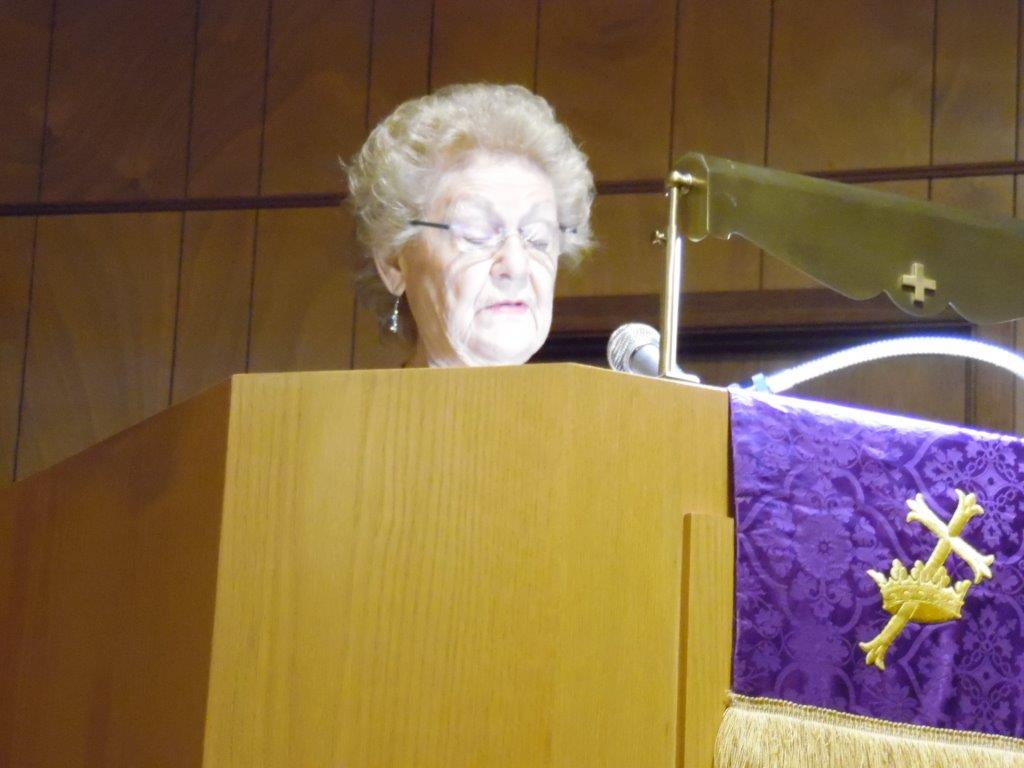
Annie Mae Korenek, a lifetime member of St. Paul's reads the church history embossed on the St. Paul Lutheran Church Historical Marker.

Annie Mae Korenek, a lifetime member of St. Paul’s reads the church history embossed on the St. Paul Lutheran Church Historical Marker.

Sermon for December 04, 2016

Sermon for the Second Sunday in Advent

December 4, 2016, St. Paul Lutheran Church, Wallis, Texas

Sermon Text:  Isaiah 11:1-10

Sermon Theme:  “Old School Lutherans and the Root of Jesse”

(Sources:  Emphasis Online Commentaries; Emphasis Online Illustrations; original ideas and examples; “You Know You Are a Lutheran If . . .”; “Es Ist Ein Ros Entsprungen”; Anderson’s Cycle A Preaching Workbook; Wikipedia)

Grace, mercy and peace to you from God our Father and from the Lord Jesus Christ.

One of the many reasons I loved coming here to serve this congregation in 1988 was the fact that my home congregation, Trinity Lutheran Church, Dime Box, reminded me so much of this church.  The parallels astonish me.

Like St. Paul’s, whose historical recognition we celebrate today, my home church was also established in 1900.  You know, thousands of German Lutherans came to America, many of them to Texas, in the mid to late 1800’s, so by 1900, there were many immigrant churches being founded in Texas, — a blessing to those who probably spoke some English by then, but were not proficient enough in English to easily understand a sermon preached in English or the Bible read in English, or the hymns sung in English.

One of the older members of this church, Anita Mayer, now deceased, told me when I first came on board as pastor here that even though her parents were quite proficient in English, they were opposed to switching from German to English.  And even though she herself could read and speak English much better than German, her father insisted that she learn Luther’s Small Catechism in German, and that the pastor confirm her in German.  The pastor went along with her father’s wishes, a fact that made the Confirmation class about three times as hard for her.  She said she was glad when this church finally did change to English.

Trinity, Dime Box, and St. Paul, Wallis, held German services from 1900 until about the time of World War II, so I grew up hearing all the old Lutheran hymns in German.  That old German hymnal was so small you almost had to have a magnifying glass to read it, but it didn’t matter, because by the time your eyesight got bad enough due to old age, you knew all the old hymns by memory anyway.  You know you’re an “old-school Lutheran” if you LOVE to sing, but ONLY if they’re the hymns you learned as a child.

We are generally considered “old school” Lutherans if we grew up with the German language used in the worship service.  There is a lot about us old school Lutherans that’s kind of quaint and lovable, but we’re also a tad obnoxious at times.  Old school Lutherans still make and serve Jello at covered dish dinners in the liturgical color of the altar paraments for that Sunday.  Old-school Lutherans fervently believe you have to serve Spam-salad sandwiches at all wedding receptions.

Because they don’t believe anyone should be proud or conceited or a show off in any way, old-school Lutherans always put the organ in the back of the church, they have the choir and the soloists sing from the back of the church, and the pastor prays with his back to the congregation.

Old-school Lutherans hear the pastor tell a joke during his sermon and they SMILE as loud as they can.  Continue reading

Sermon for November 27, 2016

Sermon for the First Sunday in Advent

November 27, 2016, St. Paul Lutheran Church, Wallis, Texas

Sermon Text:  Romans 13:11-14

Sermon Theme:  “Some Straightening Up Before He Comes Back”

(Sources:  Anderson, Cycle A, Preaching Workbook; Brokhoff’s Series A Preaching Workbook; Emphasis Online Illustrations; original ideas and examples; Concordia Self-Study Bible “Introduction” to Romans; The Life-Application Bible Footnotes; Believer’s Commentary)

Being a Circuit Counselor (now called “Circuit Visitor”) for a group of churches was never easy, and especially not in Paul’s day.  I am so thankful God never called me to serve as Circuit Visitor.  In my previous sermons, I’ve talked about some of the problems in the various churches which Paul addressed in his letters to those churches.  Some congregations had one problem, and other congregations had just the opposite problem; but almost all of them had trouble with relationships, — disagreements and quarrels, often severe.

When congregational issues got really bad, the Circuit Visitor was often called in to help before things got completely out of control.  Since my wife is organist and music director of our church, I just have to share a joke with you, wherein the music director is obviously not the pastor’s wife, and no doubt represented the thinking of the whole congregation.

In a small church in the Midwest, the music director and the pastor had conflicting viewpoints about everything and were openly feuding.  At one worship service, the Pastor announced the theme of his sermon as “Making Progress through Service.”  The music director chose the hymn, “I Shall Not Be Moved.”

The next Sunday, the Pastor preached on the necessity for generous giving.  The hymn that followed the sermon was “Jesus Paid It All.”  When the sermon theme chosen by the Pastor was “The Sin of Gossip,” the hymn that followed was “I Love to Tell the Story.”

Believing that the conflict between him and the music director could not be resolved because the people were on the director’s side, the Pastor announced at the end of the next service he was considering resigning.  The song that followed was “Why Not Tonight.”

The very next worship service, his last, the Pastor formally announced his resignation, explaining that Jesus had called him to a different ministry.  The hymn was “What a Friend We Have in Jesus.” Continue reading

Thanksgiving Eve Sermon November 23, 2016

Sermon for Thanksgiving Eve, Nov. 23, 2016

St. Paul Lutheran Church, Wallis, Texas

Sermon Text:  Luke 17:11-19

Sermon Theme:  “How Do WE Worship?”

 (Sources:  Concordia Pulpit Resources, Volume 25, Part 4, Series B; original ideas and examples; Lutheran liturgy; Prayer by Timothy Keller)

Grace, mercy, and peace to  you from God our Father and from the Lord Jesus Christ.

           How do we worship?  That question is the theme of my sermon for tonight.  Since you are a Lutheran in a Lutheran church, it may seem like an odd question.  ‘How DO we worship?  Like Lutheran are supposed to!’

But that can mean a lot of different things in the 21st Century.  Most of the time our worship is liturgical, occasionally, it is not.  Some Lutheran churches have contemporary worship; some have traditional services; some have both.  Some Lutheran churches lean heavily one way, while others focus on another.

Sometimes, we, here at St. Paul’s, sing old Lutheran hymns; sometimes we sing contemporary Christian music; sometimes we sing old-time Gospel songs.  But they are all songs that are true to the Bible.  Sunday, we had a Holy Communion service that was traditionally liturgical; tonight, we are doing a non-liturgical service.

But, you see, that’s not what I mean by the question, “How do we worship?”

What I mean by that question is:  What is true worship really all about?  That’s an important question to answer on Thanksgiving Eve.

In our sermon text for tonight, nine of the ex-lepers continue on their way to the Temple to be inspected and receive a ritualistic cleansing from the priests.  They were already cured by Jesus, but the religious leaders of the people required rites and rituals.  People could not associate with lepers unless they were pronounced cleansed by the priests. Continue reading