Sermon for May 29. 2016

Sermon for Graduate Recognition Sunday

Second Sunday after Pentecost, May 29, 2016

St. Paul Lutheran Church, Wallis, Texas

Sermon Text:  Luke 7:1-10

Sermon Theme:  “Keep the Faith, Be Healed, Don’t Give Up”

(Sources:  Anderson’s Cycle C Preaching Workbook; Emphasis Online Commentaries and Illustrations; original ideas; The Parables of Peanuts by Robert Sharp; Online Jokes and Quotations for Graduation; Brokhoff’s, Series C, Preaching Workbook)

Grace, mercy, and peace to you from God our Father and from the Lord Jesus Christ.

Today’s sermon text from the Gospel according to St. Luke is a text about faith and healing.  When a loved one passes away, do we question God, ‘Why wasn’t my loved one healed?’  And when our children graduate from high school or college, do WE have the faith, and do THEY have the faith, to believe that God will lead them to a secure future.

The Centurion speaks in our text, “Just say the Word, and I know my servant will be healed.”  Now there is faith!  Luke is reminding us of the power of the Word.  All words are powerful.  They hurt and heal, condemn and save.  Just ask anyone who has stood before a judge or heard such words from a loved one or a doctor or a minister.

In our text, the words spoken BEFORE the Centurion’s servant is healed, and AS he is healed, are not merely words from human mouths, but are the Words of Jesus, our God incarnate.

When our children graduate, especially from high school, lots of words are spoken by educators at the Commencement Ceremony and by parents at home.  Not coming from God, sometimes these words are powerful advice, and sometimes they are shallow and funny, or a mix of both.  Since today is Graduate Recognition Sunday, let me share some of those words spoken to graduates.

“There is no elevator to success.  You have to take the stairs.”

“Just remember, you can’t climb the ladder of success with your hands in your pockets.”

And here is my favorite:  “Go to it.  Be bold.  Be true.  Be kind.  Rotate your tires.  Don’t drink so much; there aren’t going to be enough liver transplants to go around!”

The best words we can offer our graduates are God’s words from Holy Scripture, and the words in today’s sermon text are no exception.  These words from St. Luke speak to our graduates, but at the same time speak to all of us, single adults, married couples, parents, and grandparents.  The graduates are having to deal with many issues at the beginning of their adult life’s journey, and some of us senior citizens are having to deal with doctors’ appointments, medications, mobility, diet, etc., as our fan belts wear thin and our engine slows down. Continue reading


Sermon for May 22, 2016

Sermon for Holy Trinity, May 22, 2016

St. Paul Lutheran Church, Wallis, Texas

Sermon Text:  Proverbs 8:1-4, 22-31

Sermon Theme:  “Who Is Wisdom Anyway?”

(Sources:  Anderson’s, Cycle C, Preaching Workbook; Brokhoff’s, Series C, Preaching Workbook; original ideas; Emphasis Online Commentaries; Online Religious Jokes; Explanation to Luther’s Small Catechism; Concordia Pulpit Resources, Vol. 26, Part 3, May 22-August 21, 2016, Series C)

Grace, mercy, and peace to you from God our Father and from the Lord Jesus Christ.

Today is Holy Trinity Sunday.  How do you explain something that is essential but unexplainable?  In today’s world, many people do not even know who Jesus is, — like the little boy is VBS who asked me who the naked man hanging on the pole was.  So how do you explain Father, Son, and Holy Spirit, three persons, one God.

There’s the story about the pastor whose financially-pinched congregation cut his salary.  To make ends meet, he had to take a job delivering pizzas.  He tried to make the extra job part of his ministry by telling folks about Jesus.

On the second day on the job, he was walking past a big construction site when he heard the workers using the foulest language he’d ever heard.  So he stopped and asked the man closest to him, “Do you know Jesus Christ?”

The worker turned to look at his fellow workers and shouted, “Hey, does anybody know Jesus Christ?”  He paused for a minute, and then announced, “His pizza is here.”

To a child who attends Sunday School and DOES know who Jesus is, the Bible can still be very confusing.

Having just joined a church and being a new Christian, Joey’s mom asked Joey what he learned in Sunday School.

“Well, Mom,” he replied, “our teacher told us how God sent Moses behind enemy lines on a rescue mission to lead the Israelites out of Egypt.  When he got to the Red Sea, he had his engineers build a portable bridge, and all the people walked across safely.  He used his cell phone to call headquarters and order an air strike.  They sent in bombers to blow up the bridge after all the Israelites went across safely and the Egyptians drowned.”

“Now, Joey, is that REALLY what your teacher taught you?’  his mother asked.

“Well, no, Mom, but if I told it the way the teacher did, you’d never believe it!” Continue reading

Pictures from Friendship Sunday

Mark Woolley playing guitar and leading the singing at our Friendship Sunday Cowboy style worship.

Mark Woolley playing guitar and leading the singing at our Friendship Sunday Cowboy style worship.

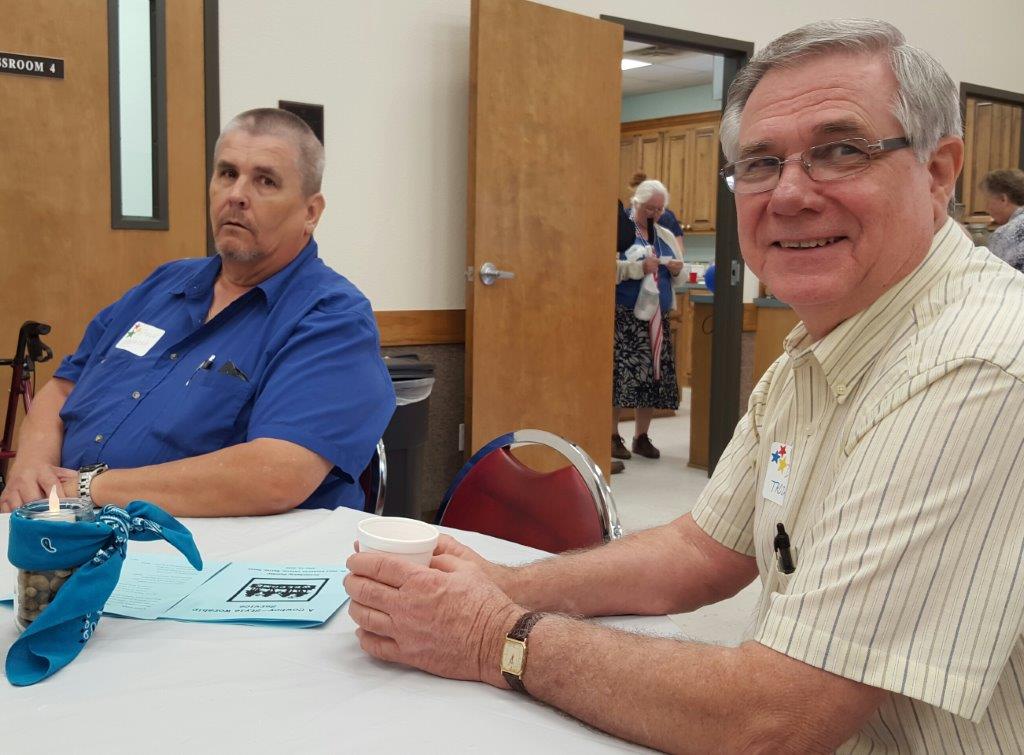
James Cruse and Robert Osborne having a good time on Friendship Sunday.

James Cruse and Robert Osborne having a good time on Friendship Sunday.

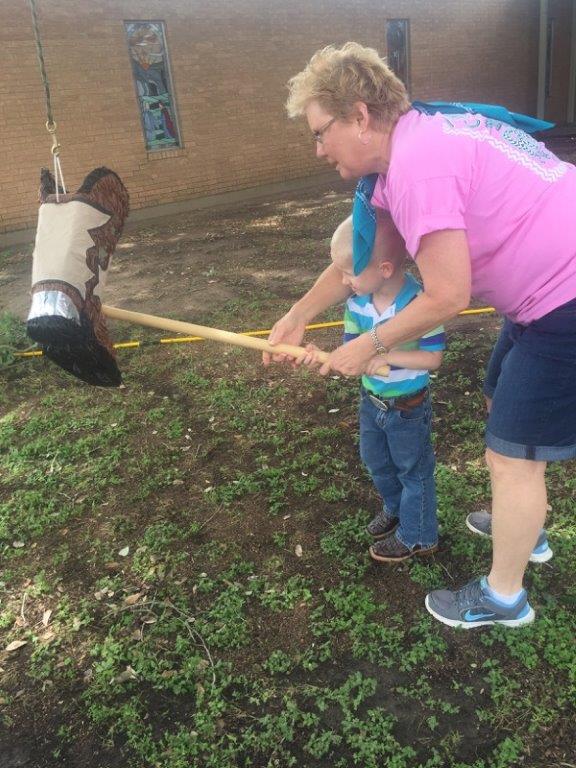
Cheryl Davis helping one of the children hit the piñata at our Friendship Sunday celebration.

Cheryl Davis helping one of the children hit the piñata at our Friendship Sunday celebration.

The Trojacek brothers enjoying the festivities on Friendship Sunday.

The Trojacek brothers enjoying the festivities on Friendship Sunday.

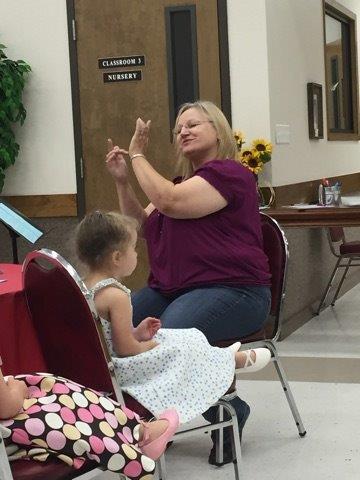
Guest Deaf Interpreter, Joanie Murdock, signing for us at Friendship Sunday (pictured with her granddaughter, Brooklyn.

Guest Deaf Interpreter, Joanie Murdock, signing for us at Friendship Sunday (pictured with her granddaughter, Brooklyn.

Sermon for May 08, 2016

Sermon for the Seventh Sunday of Easter

St. Paul Lutheran Church, Wallis, Texas, May 8, 2016

Sermon Text:  John 17:20-26

Sermon Theme:  “The Family of God:  The Model for Human Family Oneness”

(Sources:  Emphasis Online Illustrations; Emphasis Online Examples; original ideas and examples; Anderson, Cycle C, Preaching Workbook)

Grace, mercy, and peace to you from God our Father and from the Lord Jesus Christ.

Of all the special observances, Mother’s Day, no doubt, is the most sentimental and emotional of them all!  Even grown kids, who gave their Moms a rough time when they were young, and now neglect her most of the year, get teary-eyed and mushy on Mother’s Day.

Although my own mother was not a sweet, sugary type, she was a great Mom who lived by horse sense and hard work.

When my twin brother and I were young adults, with jobs and living away from home, but not yet married, we always came home for Mother’s Day.  Our mother would prepare a huge feast of all our favorite foods, after which, my father, my brother, and I would adjourn to the living room to watch television (by then they had TV).

I remember one Mother’s Day after a sumptuous dinner of our favorite dishes, my brother said to her, “Mom, you shouldn’t have to do the dishes on your special day.”

Thinking the men were going to do the dishes, she put down her dish cloth.

“Just come in the living room with us,” my brother continued, “you can always do the dishes tomorrow.”

A couple years after that, my brother got married, and he tried it with his wife.  It was the first and last time!  From that time forth, he became a committed dishwasher.

It’s amazing how our sermon text from John’s gospel works for Mother’s Day, even though such was probably not the intent of the lectionary makers.  Although my brother and I were never as considerate of our mother as we should have been, our family was very unified.  This family oneness included the extended family of my grandparents, aunts, and uncles, all of whom lived near us and worshipped at the same church we did.  As a child it made me feel very secure.

Sadly, there are far too many families that lack this oneness, and where there should be oneness there is division, frustration and unhappiness.  On this Mother’s Day, we are reminded that the model for individual human family oneness is the Family of God.  Let’s look at the model by looking at our sermon text. Continue reading

Sermon for May 01, 2016

Sermon for the Sixth Sunday after Easter

May 1, 2016, St. Paul Lutheran Church, Wallis, Texas

Sermon Text:  Acts 16:9-15

Sermon Theme:  “Are We as Startling as the Early Church?”

(Sources:  Emphasis Online Illustrations; Emphasis online Commentary; Brokhoff, Series C, Preaching Workbook; Harper’s Bible Dictionary; original ideas; Westminster Bible Dictionary; Online Business Jokes; Believer’s Commentary; “Introduction to Acts,” Concordia Self-Study Bible; Online; Online, “The Power of Women;” Personal Background in History of Costume Design)

Grace, mercy and peace to you from God our Father and from the Lord Jesus Christ.

Written by Luke, the Book of Acts is a sequel to the third gospel by Luke.  It begins soon after the crucifixion, and covers the spreading of God’s Gospel that Jesus died for the salvation of mankind, from Jerusalem through the eastern Mediterranean lands to the Capital of the Roman Empire, and from a small Christian-Jewish community to an extended church of Jewish Christians and Gentile Christians.  Today’s sermon text is taken from the 16th Chapter of Acts.

What is this new group of believers and followers of Jesus, originally known as “The Way,” going to become?  There is much in this short sermon text that lies beneath the surface and needs to be explored carefully, and the answer to the question lies partly there. When Jesus was still living on earth, the inner circle of twelve was made up of all men; it was an “organization” to the extent that Judas was its treasurer and Peter its leader and spokesman.

In Acts, Paul joins Peter as a leader and spokesman, and Luke, the well-educated doctor, records it all in two books.  Are they going to become a group of ascetic monks, hiding themselves away from active life like the Essenes, whom we believe were all men?

The inner circle of a big business tends to group itself together as a little organization, or team, within an organization, and supposedly work together like cogs on a wheel.

There was one such team of business men and women wherein one of them was going to have to have a brain transplant.  So they all went together to the hospital and met with the brain surgeon.

One of the colleagues asked, “What will the cost of a new brain be?”

The doctor replied, “A female brain costs $20,000 and a male brain cost $40,000.”  The men in the group looked at each other and smirked.

But one of the females asked, “Why is that, doctor?”

“Well,” the doctor replied, “the female brain costs less because it has been used.”

We live in an era in which it is quite common for women not only to work along side men in the business world but also serve as CEO’s.  We even have a woman running for President of the United States and another for Vice-President.  Continue reading

Sermon for April 24, 2016

Sermon for Fifth Sunday of Easter

April 24, 2016, St. Paul Lutheran Church, Wallis, Texas

Sermon Text:  John 16:12-22

Sermon Theme:  “Book Sense, Horse Sense, and God Sense”

(Sources:  Concordia Pulpit Resources, Vol. 26, Part 2, Series C; original ideas; Believer’s Commentary; Harper’s Bible Dictionary; Christian jokes online; Lutheran Cyclopedia; Facebook posts)

Grace, mercy and peace to  you from God our Father and from the Lord Jesus Christ.

When you think about it, there are three kinds of sense people can have, — BOOK sense (knowledge), HORSE sense (common sense), and GOD sense (wisdom from God).  And, unfortunately, not everybody has all three, and some people have none of the three – which means, no sense at all.

This is what you’re up against when you try to teach people.  This is what Jesus was up against in teaching the general population, and often, His own disciples as well.

In dealing with people, whether it’s Pharisees, disciples, or curiosity seekers, you can’t help but think it would be nice if they at least had horse sense, that is, common sense.

Some of  you may have seen those delightful posts on facebook recently:

“If common sense was hog lard, most people wouldn’t have enough to grease a pan.”

“Common sense is like a deodorant.  The people who need it the most never use it.”

“Common sense is a flower that doesn’t grow in everyone’s garden.”

Now there’s a lot to be said for “BOOK sense,” but book sense without common sense won’t get you very far.

Even more important than that, book sense and horse sense together, without “God sense,” leave a black hole in your life.  As Aristotle said, “Educating the mind without educating the heart is no education at all.”

But “God sense” is more than just educating your heart.  It’s more than going to church and getting involved in religious organizations.  After all, going to church doesn’t make you a Christian any more than standing in a garage makes you a car. Continue reading

Sermon for April 17, 2016

Sermon for the Fourth Sunday of Easter

April 17, 2016, East Bernard Express, East Bernard, Texas

Sermon Text:  John 10:22-30

Sermon Theme:  “The Good Shepherd Gives Us Our Spiritual Security”

(Sources:  Anderson, Cycle C. Preaching Workbook; Online skywriting.net/humor, good shepherd; online good shepherd.skipheitzig.com; original ideas and personal examples; Concordia Pulpit Resources, Volume 26, Part 2, Series C; Brokhoff, Series C, Preaching Workbook; Believer’s Commentary)

Grace, mercy and peace to you from God our Father and from the Lord Jesus Christ.

The story is told about a recent seminary graduate who was very proud of his new status as pastor of a big church.  He was giving a kids’ sermonette one day, during which he explained that “pastor” meant “shepherd.”

He also told the children about sheep, pointing out that sheep were not very smart and needed lots of guidance.  He explained that the shepherd’s job was to stay close to the sheep, protect them from wild animals, such as wolves, and keep them from wandering off and doing dumb things that would get them hurt or killed.

So he pointed to the grownups in the church, saying they were the sheep, and then he pointed to the children, saying they were the little lambs and needed lots of supervision and direction.

Then he held out his arms in a gesture of helping someone and asked the children, “If you are the lambs, then who is the shepherd,” obviously indicating himself as the answer.

After a few seconds of silence, a bright little boy spoke out, “Jesus, — Jesus is the shepherd.”

The young pastor, obviously caught by surprise, said to the boy, “Well, then, who am I?”

The little boy frowned thoughtfully and then said with a shrug, “I guess you must be the sheep dog!”

Jesus is the Good Shepherd, the Great Shepherd, and pastors are the under-shepherds.  Jesus saw the people as the sheep in need of a shepherd. Continue reading

Sermon for April 10, 2016

Sermon for the Third Sunday of Easter

April 10, 2016, St. Paul Lutheran Church, Wallis, Texas

Sermon Text:  John 21:1-14

Sermon Theme:  “So What Does This Fishing Story Mean?”

(Sources:  Anderson’s, Cycle C, Preaching Workbook; Emphasis Online Illustrations; original ideas; Online Christian Jokes; Online, “What does IXOYE mean?” by Matt Slick)

Grace, mercy and peace to you from God our Father and from the Lord Jesus Christ.

On a beautiful spring morning, I am sure many of you have been tempted to skip church and go fishing, whether succumbing to the temptation or not.

One such beautiful spring morning, ten year old Jody arrived at Sunday School late.  Miss Walker, his teacher, knew that Jody was usually very punctual, so she asked him if anything was wrong.

“No,” he replied, “I was planning to go fishing this morning, but my dad told me that I needed to go to church.”

Miss Walker was very impressed, and asked the boy if his dad had explained to him why it was more important to go to church than go fishing.

“Yes,” Jody replied, “he did.  Dad said that he didn’t have enough bait for both of us.”

In the case of the disciples in our sermon text from John’s gospel, seven of them, — Simon, Thomas, Nathanael, James, John, and two others – weren’t skipping church to fish, and fishing wasn’t their recreation, it was their career prior to following Jesus.  It seems to me that the equivalent of missing church, for them, was going back to their old fishing business rather than continue preaching, teaching, and healing as they had when Jesus was with them.  No doubt, it was both a way of giving up (we can’t carry on without the Master) and a way of releasing some of their fear, tension, and bewilderment, and a human way to normalize their lives.  What comfort they were to each other! Continue reading